- Date
- 14 Sep 2027 to 15 Sep 2027
- Time
- 9.00AM -5.30PM
- Venue
- One World Hotel, Bandar Utama, Petaling Jaya
- Trainer
- Dr. Daram
- Fee
- RM 2000 per pax (early bird), normal RM 2350
- Seats
- 15 seats left
- Claim
- HRD Corp claimable
Join this training
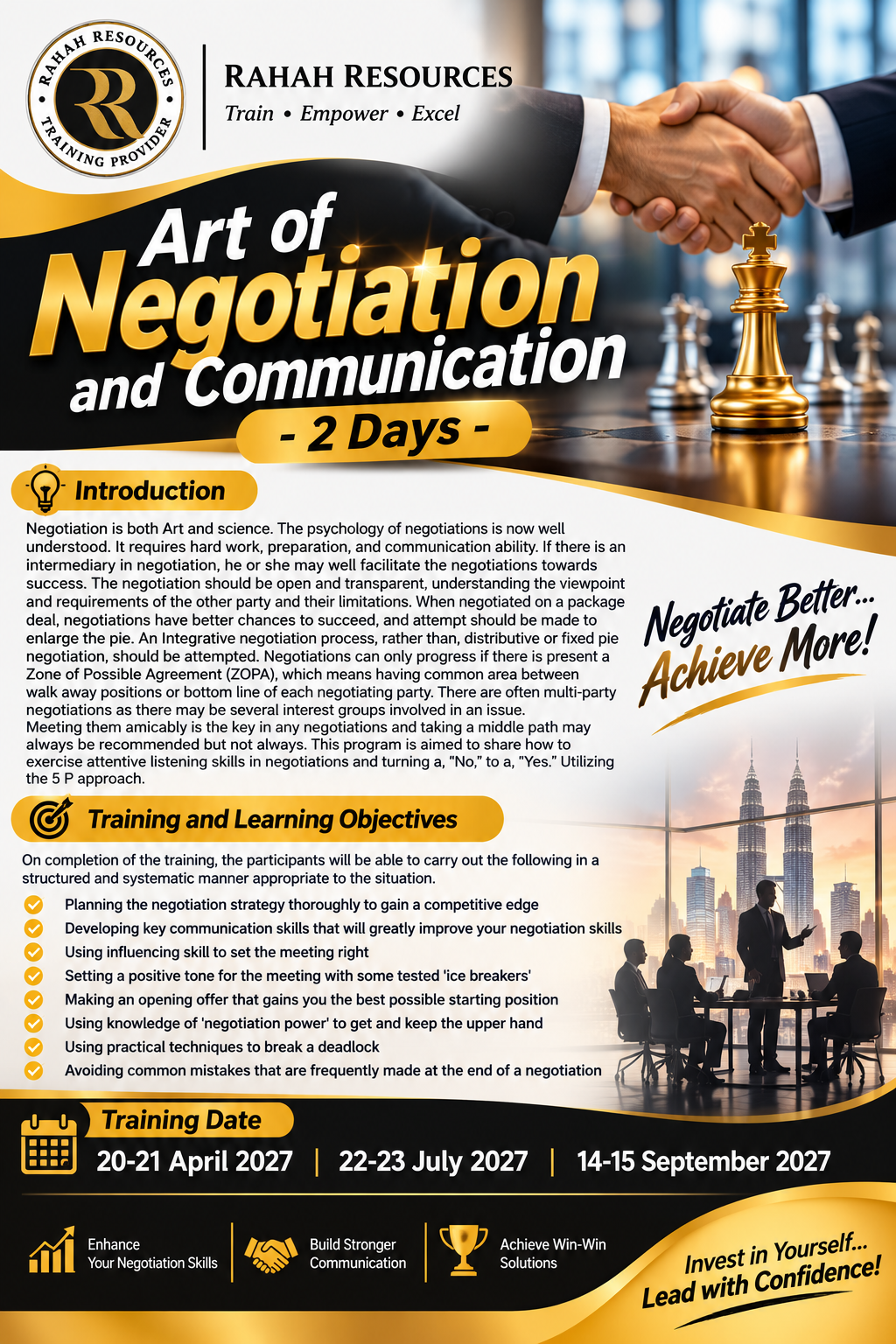
Introduction
Negotiation is both Art and science. The psychology of negotiations is now well
understood. It requires hard work, preparation, and communication ability. If there is an
intermediary in negotiation, he or she may well facilitate the negotiations towards
success. The negotiation should be open and transparent, understanding the viewpoint
and requirements of the other party and their limitations. When negotiated on a package
deal, negotiations have better chances to succeed, and attempt should be made to
enlarge the pie. An Integrative negotiation process, rather than, distributive or fixed pie
negotiation, should be attempted. Negotiations can only progress if there is present a
Zone of Possible Agreement (ZOPA), which means having common area between
walk away positions or bottom line of each negotiating party. There are often multi-party
negotiations as there may be several interest groups involved in an issue.
Meeting them amicably is the key in any negotiations and taking a middle path may
always be recommended but not always. This program is aimed to share how to
exercise attentive listening skills in negotiations and turning a, “No,” to a, “Yes.” Utilizing
the 5 P approach.
Training and Learning Objectives
On completion of the training, the participants will be able to carry out the following in a
structured and systematic manner appropriate to the situation.
➢ Planning the negotiation strategy thoroughly to gain a competitive edge
➢ Developing key communication skills that will greatly improve your negotiation skills
➢ Using influencing skill to set the meeting right
➢ Setting a positive tone for the meeting with some tested ‘ice breakers’
➢ Making an opening offer that gains you the best possible starting position
➢ Using knowledge of ‘negotiation power’ to get and keep the upper hand
➢ Using practical techniques to break a deadlock
➢ Avoiding common mistakes that are frequently made at the end of a negotiation